Comprehending Metal Casting Processes: Developments and Trends in the Foundry Market
The foundry industry is experiencing significant improvements driven by technical advancements. Advancements such as 3D printing and expert system are improving metal casting processes, enhancing performance and precision. Sustainable practices are gaining traction, highlighting the value of environmental obligation. Furthermore, the intro of innovative materials and automation is boosting total casting high quality. These growths suggest a pivotal change in the sector, elevating inquiries regarding future directions and effects for suppliers.
Advancements in 3D Printing for Metal Casting
Current innovations in 3D printing modern technology have considerably changed the landscape of steel casting. The assimilation of additive manufacturing methods has actually allowed the rapid manufacturing of complicated patterns and mold and mildews that were previously difficult or impossible to achieve with standard approaches. By making use of products such as sand and steel powders, manufacturers can develop elaborate geometries that boost layout adaptability and lower material waste. This innovation not just speeds up the prototyping procedure however likewise permits the customization of parts tailored to specific applications.
In addition, 3D printing promotes much shorter preparation, which is important in sectors calling for fast turnaround for parts. The innovation likewise sustains the manufacturing of light-weight structures, therefore improving power performance in output. Therefore, the foundry industry is witnessing a change in the direction of even more lasting techniques, driven by the efficiency and precision used by these modern 3D printing methods in steel casting processes.
The Role of Artificial Knowledge in Precision Manufacturing
As industries significantly take on advanced manufacturing technologies, man-made knowledge (AI) is playing a pivotal duty in boosting precision manufacturing processes. AI formulas examine substantial datasets to enhance and identify patterns manufacturing criteria, leading to enhanced precision and performance. In steel casting, AI aids in predictive maintenance, minimizing downtime by projecting equipment failings before they occur.
AI-driven simulations allow suppliers to design the casting process, refining layouts and lessening flaws. Artificial intelligence techniques improve quality assurance by discovering abnormalities in real-time, thereby guaranteeing that only products fulfilling stringent requirements proceed with the manufacturing line.
Sustainable Practices in the Foundry Industry
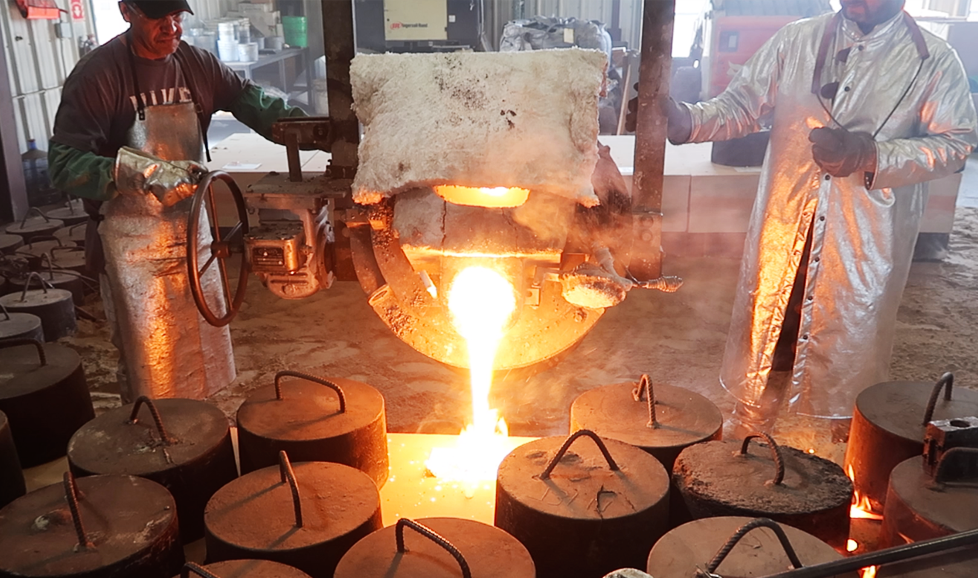
Sustainability has emerged as a critical emphasis in the foundry market, triggering producers to embrace techniques that lessen ecological effect while preserving productivity - Metal Casting. One popular method consists of the recycling of products, specifically metals, which substantially minimizes waste and energy usage. Shops are progressively executing closed-loop systems, enabling the reuse of sand and other casting products, thus reducing the need for virgin resources
Additionally, energy-efficient innovations, such as electrical heating systems, are gaining grip, as they lower greenhouse gas discharges compared to traditional approaches. Several foundries are checking out the use of environmentally friendly coverings and naturally degradable binders to decrease poisonous results. Staff member training on sustainable methods has actually additionally ended up being essential, promoting a culture of ecological duty within companies. Overall, these lasting techniques not just add to environmental conservation however also improve the long-term stability of the foundry industry in a significantly eco-conscious market.
Advancements in Products for Enhanced Casting High Quality
With the continual evolution of the foundry industry, innovations in materials have come to be crucial for improving casting top quality. Advanced alloys and composite products are significantly being utilized to enhance mechanical residential properties and minimize flaws in spreadings. These materials often use exceptional strength-to-weight ratios and enhanced resistance to corrosion and wear, dealing with the demands of modern applications.
Additionally, the consolidation of nanomaterials is acquiring grip, enabling finer microstructures that cause enhanced surface area finishes and dimensional precision. Metal Foundry. 3D printing modern technologies additionally contribute in producing intricate geometries with minimal waste, making it possible for using specialized materials that were formerly testing to cast
In addition, the advancement of eco pleasant binders and additives adds to sustainable techniques while keeping top notch outcomes. Collectively, these technologies not just enhance the efficiency of cast products however also align with the market's shift towards sustainability and efficiency.
Automation and Robotics in Metal Casting Processes
Automation and robotics are changing metal casting procedures by boosting and enhancing operations precision. In modern factories, robot systems are used for tasks such as mold and mildew handling, pouring, and ending up, greatly lowering human intervention. This not only lessens the risk of mishaps but also ensures regular top quality in production.
Automation technologies, such as computer system numerical control (CNC) makers, promote elaborate styles and intricate geometries that were previously challenging to achieve. Real-time information analytics allow manufacturers to maximize and keep track of procedures efficiency continuously.
The integration of automation brings about increased efficiency and efficiency, permitting foundries to fulfill growing market needs while minimizing preparations. As the market embraces these developments, the workforce is also progressing, calling for new abilities to run and keep advanced machinery. On the whole, the adoption of automation and robotics is a pivotal trend shaping the future more info of metal casting procedures.
Frequently Asked Concerns
What Is the History of Metal Casting Techniques?
Metal casting strategies go back to ancient worlds, with evidence of bronze casting in Mesopotamia around 3000 BCE. Over centuries, approaches evolved greatly, including developments in products and technology, forming modern-day industrial methods.
Exactly How Does Metal Casting Impact the Environment?
Metal casting substantially impacts the atmosphere via power intake, exhausts, and waste generation. Advancements in sustainable methods and technologies aim to mitigate these results, promoting more eco friendly techniques within the sector.
What Precaution Are Essential in Shops?

What Are Common Flaws in Metal Casting Products?
Usual defects in steel casting products include porosity, shrinkage, misruns, chilly shuts, and surface flaws. These problems emerge from variables such as improper temperature control, insufficient mold and mildew design, and contamination throughout the casting process.
Exactly How Do Foundries Guarantee High Quality Control in Casting Processes?
Shops carry out extensive top quality control steps via routine inspections, standard screening, procedure monitoring, and adherence to market criteria. These methods help identify issues early, ensuring the integrity and reliability of the final casting products.
Technologies such as 3D printing and fabricated intelligence are reshaping steel casting procedures, enhancing effectiveness and precision. Current innovations in 3D printing technology have significantly transformed the landscape of steel casting. Automation and robotics are transforming metal casting procedures by streamlining procedures and enhancing precision. Metal casting techniques day back to old people, with proof of bronze casting in Mesopotamia around 3000 BCE. Usual flaws in metal casting items consist of porosity, shrinkage, misruns, cold shuts, and surface area imperfections.